In 2007, a Microsoft executive walked away from a corporate career to ask a harder question: why do millions of educated people remain unemployable? Eighteen years later, that question drives everything we build.
WhiteBoard Labs did not start as a business plan. It started as an answer to a problem that nobody in education seemed willing to solve: that learning without real-world validation produces graduates who are theoretically qualified but practically unemployable. Closing that gap has been our mission since day one.
Dr. Rohit Shipstone departed Microsoft India. Not to start a company, but to answer a question. Could the early internet bring high-quality STEM education and elite educators to India's most remote regions? E-Ready Solutions was born from that conviction: that geography should never determine opportunity.
The model attracted international attention. E-Ready Technologies was incubated in the Rockville Tech Belt, Washington DC, as part of the Technology Council of Maryland. The platform served schools across the US and the growing CSC network in India, proving the cross-border education model worked at scale.
E-Ready Technologies was successfully acquired in 2012. But rather than retire, Dr. Shipstone returned to what he saw as an even deeper problem: not access to education, but the gap between education and employment. With 86% of Indian higher education graduates considered unemployable by industry, Collabzo Solutions was formed in 2013: bootstrapped, ambitious, and built around one goal. Closing the employability gap.
Following three years of intensive content development in partnership with Velsoft (Australia/Canada), a pilot programme at a Sharda University institution delivered a result that changed everything: a 96% placement rate for its entire engineering cohort. This was not a marketing claim. It was proof that the model — structured learning combined with real industry mentoring — could produce outcomes that traditional education could not.
The brand launched officially in 2019, operating on a hybrid model: 75% classroom, 25% digital. The name reflected the founding philosophy — the whiteboard as the place where ideas become plans, where theory meets practice, where mentors and learners think together.
COVID-19 forced a decision that became a competitive advantage. WBL pivoted to 100% online delivery, not as a compromise, but as a deliberate transformation. Recognising the permanent shift in global learning behaviour, the digital model was rebuilt from the ground up. The result was a platform capable of serving learners from the Caribbean to Central India to the Middle East without compromising the human element that made WBL different.
To meet international benchmarking standards and access global partnership networks, WhiteBoard Labs was formally incorporated in Australia. Supported by a specialised international content development team, the Australian entity gave the brand the credibility architecture needed to partner with universities, governments, and enterprises across Australasia, India, and the Middle East.
In 2024, WBL launched its platform in partnership with NASSCOM's FutureSkills Prime, India's national technology skilling hub, and crossed 8,652 enrolments with zero paid marketing. In 2025, we made a deliberate strategic shift: away from the position of "training provider" and towards our true identity as a Mentor-Validated Employability Engine. We do not compete on content. We compete on proof.
The internet solved the access-to-knowledge problem. AI is solving the content-creation problem. Neither has solved the one that employers actually face every day: how do I know this person can actually do the work?
Certificates tell you what someone studied. Grades tell you how they performed in an exam. Neither tells you how they perform when a real problem is in front of them, a deadline is pressing, and a team is depending on them.
WhiteBoard Labs was built to close exactly that gap. Our model is not about delivering more content. It is about putting a verified industry practitioner behind every learner: someone who has done the work, knows what real competency looks like, and is willing to sign their name to it.
That sign-off is what makes a WBL credential mean something. And it is what drives everything we build.
India is shifting from a services-led economy to an AI-first innovation economy. The infrastructure is being built. The talent exists. But hardware without a skilled workforce is a stranded asset — and skills without validated proof of capability are invisible to global employers. WBL's training serves as the human infrastructure layer for that transition.
Telangana is investing heavily in physical AI infrastructure. This training ensures the local workforce — from Hyderabad to Tier-2 cities — can actually orchestrate the technology being built around them.
Outcome: Moves the state from "hosting AI companies" to "producing AI leaders."
The problem is not a shortage of talent — it is under-utilisation. WBL's MPQ (Machine-Person Quotient) standard makes Telangana youth instantly more visible and employable to global MNCs seeking validated AI capability.
Outcome: Reduces underemployment among engineering graduates and career changers.
With 39% of 2025 skills becoming obsolete, Hyderabad's IT and banking powerhouse risks displacing mid-level professionals. WBL pivots them from manual data workers to high-value human orchestrators.
Outcome: Maintains the state's competitive edge against global tech hubs.
AI orchestration skills allow professionals in regional Telangana to compete for global roles without migrating to Hyderabad — and create pathways for return-to-work mothers through remote AI-driven roles.
Outcome: Economic upliftment for regional professionals and underserved communities.
Primary Market
University Partnerships
Strategic Markets
Approved Provider
Certification Partnership
Recognised Partner (India)
CPD approval signals internationally recognised professional development standards. WBL programmes meet CPD quality benchmarks — meaningful for institutional partnerships in the UK, Australia, and globally.
ICCP partnership validates WBL's competency assessment methodology against international certification standards — giving institutional partners confidence in the rigour of WBL sign-offs.
NASSCOM recognition provides direct credibility in the Indian higher education and enterprise market — supporting WBL's university partnerships across India and the MENA region.
WhiteBoard Labs is led by a team that combines academic depth, corporate experience, platform-building expertise, and on-the-ground knowledge of the markets it serves.

Managing Director
Rajiv Shipstone is the architect of WhiteBoard Labs' operational and platform infrastructure. As Managing Director, he leads the development of the MetaGig Platform — WBL's global digital ecosystem — and oversees the strategic partnerships, academic collaborations, and institutional relationships that bring it to life.
With a focus on impact at scale, Rajiv builds the systems that connect learners, educators, and industry mentors into a coherent, measurable learning ecosystem — translating WBL's validation philosophy into working products that empower students and professionals to stay relevant throughout their careers.
LinkedIn
Founder
Dr. Rohit Shipstone founded WhiteBoard Labs on a conviction he formed inside one of the world's largest technology companies: that knowledge without employability is incomplete. After a senior career at Microsoft India and HCL, he left in 2007 to build the systems that would close the gap between education and the workforce, a mission that has produced three startups, two international incubations, and a platform now operating across three continents.
He holds a Professional Doctorate in Management and E-Business, a Master's in Economics, and executive education from Stanford University and the University of Virginia. Patent holder. Author of three publications on Human Capital Development and E-Learning. Visiting Professor of Industry 4.0.
LinkedIn
Sr. Director Operations & Finance, India, MENA
Dinesh Kumar S leads WhiteBoard Labs' strategic expansion across India and the Middle East & North Africa. As Senior Director of Operations and Finance, he is responsible for capital allocation, financial planning, and the investment decisions that power WBL's growth into new institutional and government markets.
With a background in high-growth technology finance and strategic forecasting, Dinesh brings the financial architecture that supports WBL's hybrid delivery model — ensuring the platform's expansion into government skilling initiatives, university partnerships, and enterprise programmes is built on a sustainable, high-impact foundation.
LinkedIn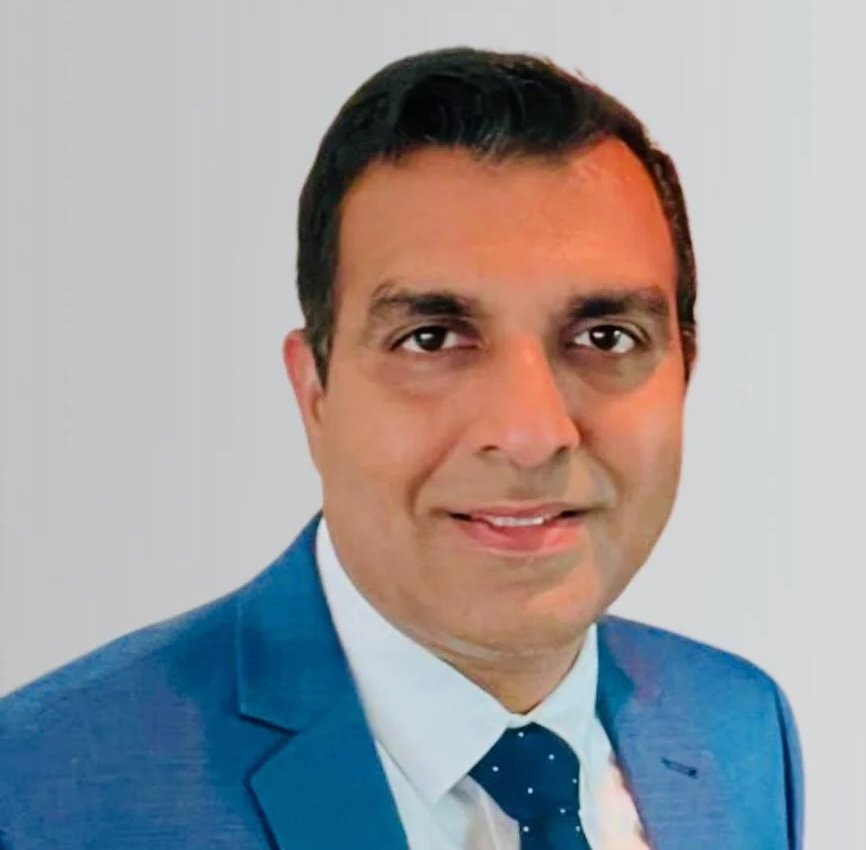
CSO and Executive Director — Australasia
Venkatesh (Venki) Arunachalam brings over two decades of experience building and scaling digital businesses across Australasia. He has guided organisations from early-stage ideas through to growth and operational maturity, with a track record spanning financial services, government, life sciences, and telecommunications.
Based in Sydney, Venki is known for his ability to translate complex business challenges into clear, practical solutions. His strengths lie in shaping product direction, building high-performing teams, and driving disciplined delivery. With a strong focus on customer value and sustainable growth, he plays a central role in defining how Whiteboard Labs supports universities and enterprise clients in navigating workforce and digital transformation.
LinkedIn
Courseware development partner providing industry-aligned training content across WBL's course library.
Specialist IT management curriculum partner supporting WBL's enterprise and higher education programmes.
Virtual Centre of Excellence for Industry 4.0; cross-regional delivery across the Caribbean, India, and Australia.
Strategic alliance for competency-based, mentor-supported learning and a Centre of Excellence in Industry Training and Startup Incubation.
Industry 4.0 readiness pilot; WBL Employability Audit deployed for rural student cohorts.
Competency-led curriculum integration including AI, Data Analytics, and Digital Marketing modules alongside core academic programmes.
Industry-aligned skilling partnership focused on employability outcomes and WBL credential pathways for undergraduate and postgraduate cohorts.
Collaborative programme embedding WBL's competency audit framework to bridge specialised agricultural education with agri-tech and rural workforce readiness.